Morgan silver dollars are among the most iconic coins in American numismatics. Minted from 1878 to 1904, and again in 1921, these large silver coins carry nearly 150 years of history, substantial precious metal content, and a collector market that continues to reward informed buyers.
Whether you are an investor looking for tangible silver exposure with numismatic upside, or a collector drawn to the artistry and history of 19th-century coinage, Morgan dollars occupy a unique position at the intersection of bullion and collectibles.
This guide covers what drives Morgan silver dollar values in 2026, which dates and mint marks matter most, and how to approach these coins as both a collector and an investor.
What Is a Morgan Silver Dollar?
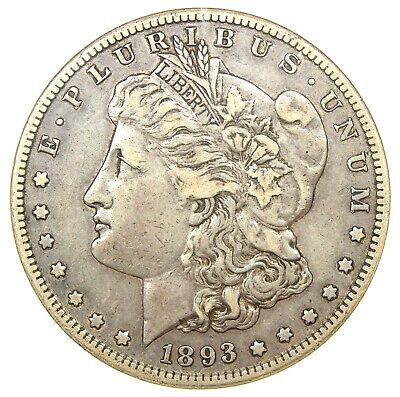
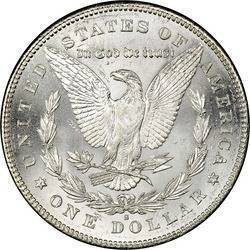
The Morgan silver dollar takes its name from George T. Morgan, the British-born engraver who designed the coin while working at the United States Mint. The obverse features a profile of Lady Liberty, modeled after Philadelphia schoolteacher Anna Willess Williams. The reverse depicts a heraldic eagle clutching arrows and an olive branch, framed by a laurel wreath.
Each Morgan dollar weighs 26.73 grams and contains 0.7734 troy ounces of silver at a fineness of 90%. That silver content creates a meaningful floor value tied directly to the silver spot price.
Morgan dollars were struck at five different U.S. Mint facilities, each identified by a small mint mark on the reverse, just above the “DO” in “DOLLAR”:
- Philadelphia (no mint mark) — The primary production facility, responsible for the highest total mintages across most years.
- New Orleans (O) — Produced Morgans from 1879 through 1904. New Orleans coins often exhibit softer strikes compared to other mints.
- San Francisco (S) — Known for generally strong strikes and good luster, San Francisco produced Morgans from 1878 through 1904 and again in 1921.
- Carson City (CC) — The most sought-after mint mark among collectors. Carson City operated from 1878 to 1893, and its relatively low mintages translate into significant premiums across nearly every date.
- Denver (D) — Only struck Morgan dollars in 1921, the final year of the series.
Morgan Silver Dollar Melt Value in 2026
With silver trading near $73.55 per troy ounce as of early April 2026, the melt value of a single Morgan silver dollar sits at approximately $56.87 based on its 0.7734 ounces of fine silver content.
This represents a dramatic increase from historical norms. For context, silver traded below $25 per ounce as recently as 2023, which placed Morgan dollar melt values closer to $19. The current environment means that even heavily worn, dateless Morgan dollars carry meaningful intrinsic value.
However, melt value is just the starting point. The vast majority of Morgan dollars trade at a premium above their silver content due to collector demand, historical significance, and the coin’s enduring popularity.
What Are Morgan Silver Dollars Worth?
Morgan dollar values span an enormous range depending on date, mint mark, condition, and rarity. Here is a general framework for 2026 market values:
Common dates in circulated condition (VG to VF): $60 to $85. These are the most available Morgans, including dates like 1881-S, 1882-S, 1884-O, and 1921. Even at the low end, these coins trade at a healthy premium over melt value.
Common dates in uncirculated condition (MS60 to MS63): $90 to $200. A step up in preservation adds a noticeable premium, particularly for coins with good luster and minimal bag marks.
Better dates in uncirculated condition (MS64 to MS65): $250 to $1,500 or more. The jump from MS63 to MS65 can be dramatic. Third-party grading from PCGS or NGC becomes increasingly important at these levels, as the difference of a single grade point can represent hundreds or thousands of dollars.
Key dates and rarities: $1,000 to six figures. The 1893-S Morgan dollar is the undisputed king of the series, with only 100,000 business strikes produced. Circulated examples start around $4,000 to $6,000, while uncirculated specimens have crossed $100,000 at auction. Other key dates include the 1889-CC, 1893, 1894, and 1895 (proof only).
Carson City Morgans: Expect to pay two to twenty times what a comparable Philadelphia or New Orleans coin would bring. Carson City mint marks carry a romance and scarcity factor that sustains strong premiums even for the more common CC dates like 1882-CC and 1884-CC.
Key Dates and Mint Marks Every Collector Should Know
Not all Morgan dollars are created equal. While the series spans dozens of date and mint mark combinations, several stand out as the most important for collectors to understand.
The Rarest Morgan Dollars
The 1893-S holds the title as the lowest-mintage business strike Morgan dollar at just 100,000 coins. It is the key to the entire series. The 1895 Philadelphia issue is sometimes called “The King of Morgan Dollars” because no business strikes are confirmed to exist — only 880 proof specimens were made, and they routinely sell for $25,000 or more.
The 1889-CC is another major rarity. Despite a mintage of 350,000, survival rates in uncirculated condition are extremely low, making gem examples five-figure coins.
Carson City Highlights
Beyond the 1889-CC, collectors prize the 1879-CC, 1893-CC, and 1878-CC as challenging dates to locate in higher grades. Even the more affordable Carson City dates like the 1882-CC, 1883-CC, and 1884-CC are popular because many were held in GSA (General Services Administration) government hoards and released with original packaging, adding a layer of provenance and appeal.
The 1921 Morgan Dollar
The 1921 Morgan dollar deserves special mention. It was the final year of the series and saw massive production across three mints — Philadelphia, Denver, and San Francisco — with a combined mintage exceeding 80 million coins. This makes 1921 the most common date by a wide margin, and a natural entry point for new collectors. Circulated examples are widely available near the $60 to $70 range.
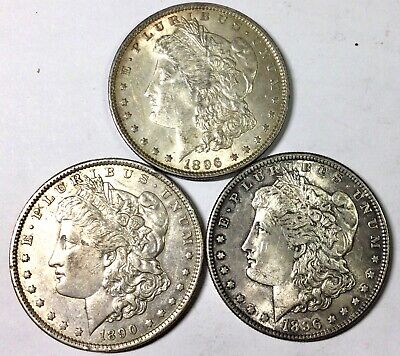
However, it is worth noting that the 1921 coins were struck using a different hub than earlier Morgans, giving them a slightly different appearance. Some collectors specifically focus on the pre-1921 issues for this reason.
VAM Varieties
Serious Morgan dollar collectors often venture into the world of VAM varieties — die variations cataloged by Leroy Van Allen and A. George Mallis. These include doubled dies, repunched mint marks, and other die anomalies. Some VAM varieties command substantial premiums, while others are primarily of academic interest. The VAM collecting community remains one of the most active in all of numismatics.
Morgan Silver Dollars as an Investment
Morgan dollars occupy an interesting niche in the precious metals investment landscape. They offer a combination of silver bullion value and numismatic premium that distinguishes them from pure bullion products like American Silver Eagles or generic silver rounds.
The Bull Case for Morgan Dollars
Built-in floor value. Every Morgan contains 0.7734 troy ounces of silver. At current prices, that gives each coin a melt value approaching $57. This creates a tangible safety net that moves with the broader silver market.
Finite supply. Unlike modern bullion coins that are produced annually in the millions, Morgan dollars are a closed series. No more will ever be made in their original form. As coins are lost, damaged, or absorbed into long-term collections, the available supply gradually shrinks.
Numismatic upside. While a generic silver round will always be worth its weight in silver and little more, a Morgan dollar’s premium above melt can grow substantially over time as collector demand increases for specific dates, grades, or varieties.
Portfolio diversification. Physical silver assets like Morgan dollars exist outside the traditional financial system. They carry no counterparty risk and are not subject to the same forces that affect stocks, bonds, or digital assets.
No reporting requirement. Under current U.S. regulations, sales of Morgan silver dollars by individuals are generally not subject to Form 1099-B reporting by dealers, unlike certain bullion products sold in larger quantities. However, capital gains tax obligations still apply, and you should consult a qualified tax professional for guidance on your specific situation.
What Investors Should Watch For
Premiums over melt. The premium you pay above a Morgan dollar’s silver content is the key variable. Buying common-date Morgans at modest premiums (10% to 40% over melt) positions you to benefit from both rising silver prices and collector demand. Paying extreme premiums on common coins, however, means you need numismatic appreciation just to break even.
Grading and authentication. For any Morgan dollar you plan to invest more than $100 in, third-party grading from PCGS or NGC is strongly recommended. A certified coin in a sealed holder provides confidence in both authenticity and condition, and certified coins are far more liquid when it comes time to sell.
Counterfeits. The Morgan dollar is one of the most counterfeited coins in the world. Chinese-made fakes flood online marketplaces. Buying from reputable dealers and insisting on certified coins for higher-value purchases is the best defense.
Liquidity. Morgan dollars are among the most liquid coins in the numismatic market. Major dealers, coin shows, and online platforms all maintain active buy and sell markets. This is a meaningful advantage for investors who may need to convert their holdings back to cash.
How to Start Collecting Morgan Silver Dollars
If you are new to Morgan dollars, there are several approachable ways to build a collection without breaking the bank.
Start With a Type Coin
A “type coin” is a single example representing the series. Pick up a common-date Morgan in VF or EF condition for $65 to $80 and get familiar with the design, weight, and feel of the coin. An 1881-S, 1882-S, or 1884-O are all excellent choices for a first Morgan dollar.
Collect by Mint Mark
Many collectors aim to acquire one Morgan dollar from each of the five mints: Philadelphia, New Orleans, San Francisco, Denver, and Carson City. The first four are relatively affordable, but adding a Carson City example will require a more meaningful investment, typically $150 to $300 for a common CC date in circulated condition.
Build a Date Set
Assembling a complete date set of Morgan dollars from 1878 through 1921 is a classic numismatic challenge. Most dates are affordable in circulated grades, but the key dates mentioned earlier will test your patience and budget. Many collectors leave the most expensive dates for last and enjoy the hunt for decades.
Focus on Grade
Some collectors choose a specific grade — say, MS64 — and try to acquire as many different dates as possible at that level. This approach emphasizes coin quality and creates a visually uniform collection.
Storing and Protecting Your Morgan Dollars
Proper storage preserves both the physical condition and the value of your coins. Never clean a Morgan dollar, as cleaning destroys the original surfaces and significantly reduces collector value.
For raw (uncertified) coins, use non-PVC coin flips or hard plastic capsules designed for silver dollars. Avoid soft PVC holders, which can chemically react with the coin’s surface over time and cause permanent green damage.
Certified coins in PCGS or NGC holders are already well-protected, but should still be stored in a cool, dry environment away from direct sunlight.
For larger collections or higher-value coins, a home safe or bank safety deposit box provides physical security. Consider documenting your collection with photographs and a detailed inventory for insurance purposes.
The Bottom Line
Morgan silver dollars remain one of the most compelling intersections of precious metal investing and numismatic collecting available today. With silver prices elevated and collector interest in classic U.S. coins holding strong, Morgans offer tangible value, historical significance, and a collecting experience that has captivated coin enthusiasts for well over a century.
Whether you are buying your first Morgan dollar or adding a key date to a lifelong collection, understanding the factors that drive value — silver content, date, mint mark, condition, and authenticity — puts you in the best position to make informed decisions.
Values cited in this article reflect market conditions as of early April 2026. Coin values fluctuate with the silver market and collector demand. Always verify current pricing through reputable dealers or recent auction results before making purchase decisions. This content is for informational purposes only and does not constitute financial or investment advice.