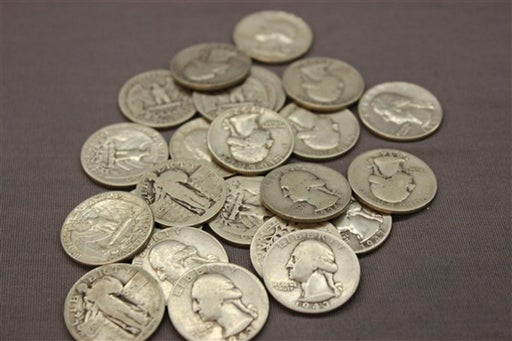
Junk silver quarters represent one of the most accessible entry points for precious metals investors and numismatic collectors. These U.S. quarters minted before 1965 contain 90% silver and 10% copper, making them valuable for both their silver content and potential numismatic premium. Whether you’re building a precious metals portfolio or starting a coin collection, understanding junk silver quarters is essential.
What Are Junk Silver Quarters?
Junk silver quarters are circulated U.S. quarters minted before 1965 that contain 90% pure silver. The term “junk” doesn’t imply poor quality—rather, it refers to their circulated condition and the fact that they’re valued primarily for silver content rather than rarity or pristine condition. These quarters were minted in large quantities and saw heavy circulation before silver coinage was discontinued in 1965.
Each junk silver quarter contains exactly 0.1808 troy ounces of pure silver (ASW), standardized across all pre-1965 quarters regardless of series or mint mark. This consistency makes quarters ideal for stacking, as you know precisely how much silver you own.
Silver Content & Weight Specifications
All U.S. quarters minted from 1892 through 1964 share identical specifications:
- Total Weight: 6.25 grams
- Silver Content: 90% (5.625 grams)
- Copper Content: 10% (0.625 grams)
- Pure Silver Weight (ASW): 0.1808 troy ounces
- Diameter: 24.26 mm
- Thickness: 1.75 mm
This consistent composition means that regardless of which series you own—whether Barber, Standing Liberty, or Washington—you’re getting the same amount of silver bullion value.
Current Live Melt Value
The current melt value of a junk silver quarter is: $0
This value fluctuates with the spot price of silver. Dealers typically offer quarters at a premium above melt value, usually 15-30% depending on demand, quantity, and market conditions. Understanding the relationship between spot price and your purchase price is crucial for making informed investment decisions.
Major Junk Silver Quarter Types
Barber Quarters (1892-1916)
Barber quarters, named after designer Charles E. Barber, were the first of three major U.S. quarter designs. Produced from 1892 to 1916, these coins feature Liberty on the obverse wearing a Phrygian cap and facing left. The reverse displays an eagle with outstretched wings, olive branch in one talon and arrows in the other.
Barber quarters were minted at multiple locations: Philadelphia (no mint mark), Denver (D), and San Francisco (S). Key dates include the scarce 1901-S and 1913-S varieties, which command modest premiums even in junk condition. Most circulated Barber quarters sell for melt value plus a standard premium, though exceptionally rare dates may fetch more.
For more information on identifying and valuing these coins, see our detailed guide to Barber silver quarters.
Standing Liberty Quarters (1916-1930)
Introduced in 1916, Standing Liberty quarters represent a significant artistic departure from earlier designs. Liberty appears on the obverse standing with a shield and spear, symbolizing preparedness. The reverse features an eagle in flight, making this the first U.S. circulating coin to depict an eagle in motion.
This series includes two major design variants. Early issues (1916-1917) show Liberty’s bare breast; production was halted and redesigned with added mail covering for decency. Key dates include the rare 1916 (very low mintage), 1921 (extremely scarce), and certain San Francisco and Denver mint issues.
Standing Liberty quarters remain highly collectible, and certain dates command significant numismatic premiums over melt value. Learn more in our Standing Liberty quarters guide.
Washington Quarters (1932-1964)
Washington quarters, introduced in 1932 to commemorate the 200th anniversary of George Washington’s birth, comprise the largest portion of junk silver quarters in circulation today. These coins feature Washington’s profile on the obverse and an eagle perched on a rock (pre-1965 design) on the reverse.
Washington quarters were produced in massive quantities at multiple mints throughout the 1930s-1960s. Most circulated examples sell at melt value plus modest premiums, as they’re extremely common. However, certain low-mintage dates—particularly from Denver and San Francisco—carry collector premiums.
The earliest Washington quarters (1932-1933) are scarcer, and the key date is 1932-D. For comprehensive details on this prolific series, visit our Washington silver quarters guide.
Key Dates by Series
While most junk silver quarters are valued primarily for melt content, specific dates command numismatic premiums:
Scarce Barber Quarter Dates
- 1901-S: Limited production
- 1913-S: Very scarce
- 1915-S: Moderate scarcity
- 1916: Final year of design
Key Standing Liberty Quarter Dates
- 1916: Extremely rare (low mintage)
- 1921: Scarce (only minted this one year)
- 1923-S: Moderate premium
- 1927-D: Scarce Denver mint
Notable Washington Quarter Dates
- 1932-D and 1932-S: First year, lower mintage
- 1933-S: Scarce
- 1942-1945 (Certain dates): Moderate premiums
- 1950-D: Low mintage Denver coin
For detailed information on spotting key dates that command higher premiums, see our guide on how to spot key dates in junk silver.
How to Identify Silver Quarters
Distinguishing 90% silver quarters from post-1964 clad quarters is straightforward once you know what to look for:
Visual Identification
- Edge Color: Silver quarters display a solid silver edge throughout the coin’s thickness. Post-1964 clad quarters show a distinctive copper-colored layer sandwiched between outer silver layers.
- Weight: A U.S. quarter should weigh 6.25 grams if silver. Clad quarters weigh 5.67 grams.
- Minting Date: Any quarter dated 1964 or earlier (barring some rare 1965 errors) contains 90% silver. 1965 onward are clad except for certain special mint sets.
- Luster and Patina: Pre-1965 quarters often exhibit attractive toning and original silver patina, even in circulated grades.
Sound Test
An informal method involves dropping a coin on a hard surface. Silver coins produce a distinct ringing sound that differs noticeably from clad coins due to their density and composition. While not scientifically precise, this can be a quick preliminary check.
Magnet Test
Neither silver nor clad quarters should be magnetic. If a quarter is attracted to a magnet, it’s a counterfeit. This simple test eliminates obvious fakes immediately.
Grading and Condition Basics
Understanding coin grading helps you assess the numismatic premium potential of your quarters beyond melt value.
Junk Silver Grade Categories
Fair (FR): Heavy wear, but all major design elements are visible. Date and mint mark may be faint. Most circulated junk silver quarters fall into this category.
About Good (AG): Substantial wear with significant loss of detail. Design elements are outlined but flattened. Numismatic value minimal.
Good (G): Well-worn with major devices outlined and lettering visible. Still carries junk value primarily for silver content.
Very Good (VG): Moderate wear showing approximately half the detail. Hair and feathers have some definition. Collecting appeal increases.
Fine (F): All major features visible with light to moderate wear. Facial features show some detail. Possible modest collector premiums.
Very Fine (VF): Light wear on highest points. Details remain sharp with only slight smoothing. Collecting premium potential increases significantly.
Extremely Fine (EF or XF): Minimal wear on highest points only. Most details sharp and well-defined. Considerable collector appeal and premium potential.
For junk silver investors, condition matters less than for numismatic collectors. Even heavily worn quarters carry full melt value. However, if you discover key dates in better condition, having them properly graded can unlock significant additional value.
Buying Guide for Junk Silver Quarters
Purchase Strategies
Junk silver quarters are available through multiple channels:
Face Value Bags: Dealers typically sell quarters by the $100 face value bag. At current silver prices, a $100 face value bag contains approximately 400 quarters (400 × 0.1808 oz = 72.32 troy ounces of pure silver). This is the most efficient way to build position while minimizing premiums.
Rolls: A roll of quarters contains 40 coins with $10 face value and 1.8032 troy ounces of pure silver. Rolls carry slightly higher premiums per ounce than bags but offer more flexibility.
Spot Purchases: Buying individual coins or small quantities works for collectors but incurs higher premiums per ounce of silver.
Premium Considerations
When evaluating junk silver quarters, always calculate the cost per troy ounce of silver and compare to the current spot price. If a dealer is asking $5 per quarter when each contains $0 in silver, you can quickly determine the markup percentage.
Typical premiums range from 15-30% above spot, depending on:
- Order quantity (larger orders typically receive smaller premiums)
- Current market demand
- Available inventory
- Precious metals market conditions
Where to Buy
Reputable dealers, coin shops, and online precious metals retailers all offer junk silver quarters. Verify dealer credentials, read reviews, and compare prices across multiple sources. Organizations like the Professional Numismatists Guild maintain lists of trustworthy dealers.
Collector vs. Investor Perspective
Junk silver quarters appeal to two distinct audiences:
Precious Metals Investors: View quarters as accessible silver bullion with standardized content. A $100 face value bag offers convenient entry into silver without significant premiums over spot price. These investors focus on accumulating silver ounces efficiently.
Numismatic Collectors: Appreciate the historical significance, design artistry, and rarity of specific dates and mint marks. These collectors pursue rare dates, varieties, and coins in exceptional condition. They understand that key dates can command substantial premiums over melt value.
The beauty of junk silver quarters is that a single coin satisfies both perspectives. You always know its melt value, yet you might discover a rare date worthy of numismatic grading and certification.
Storage and Preservation
Proper storage protects your investment and maintains the coins’ condition:
- Temperature and Humidity: Store quarters in a cool, dry location. Extreme humidity can cause toning or corrosion over time.
- Containers: Use non-PVC holders or acid-free flips. Avoid vinyl or PVC-containing materials that can damage silver surfaces.
- Handling: Minimize handling to preserve original surfaces. Wear cotton gloves if necessary.
- Security: Store larger quantities in a home safe, bank safe deposit box, or secure vault facility.
Building a Quality Junk Silver Quarter Collection
If you’re interested in both investment value and collecting appeal, consider a diversified approach:
Foundation: Begin with a $100 face value bag of mixed-date Washington quarters. This provides bulk silver exposure and exposure to multiple years and mint marks at reasonable premiums.
Series Examples: Acquire representative examples of each major series (Barber, Standing Liberty, Washington) to understand their distinctive characteristics and historical context.
Key Dates: Gradually seek out scarcer dates and mint marks as your knowledge grows. Focus on dates that carry meaningful premiums but remain affordable.
Higher Grades: If you discover any quarters in Fine or better condition, consider having them certified by PCGS or NGC. Grading can reveal hidden value in otherwise ordinary coins.
Learn more about building a balanced precious metals portfolio in our guide to the best 90% silver coins to start stacking.
Calculating Melt Value
Understanding how to calculate melt value empowers you to evaluate any purchase offer confidently:
Formula: Quarter Melt Value = Spot Price per Troy Ounce × 0.1808
Example: If silver is trading at $30 per troy ounce, one quarter’s melt value equals $30 × 0.1808 = $5.42
For detailed instruction on melt value calculations and strategies, see our comprehensive guide on how to calculate the melt value of junk silver coins.
Comparing Quarters to Other Junk Silver Denominations
Quarters fit within a broader universe of junk silver coins. Compared to other denominations:
vs. Dimes: Quarters offer higher absolute silver content per coin (0.1808 oz vs. 0.0723 oz) but identical percentage composition. Quarters typically carry smaller premiums.
vs. Half Dollars: Halves contain more silver (0.3617 oz for pre-1965) but are less common in circulation. Quarters offer easier availability for building position.
vs. Silver Dollars: Dollars contain substantially more silver (0.7734 oz) but are significantly scarcer and typically carry higher premiums.
For context on all junk silver types and how they compare, visit our junk silver overview.
Historical Context and Numismatic Significance
The three quarter designs span nearly three-quarters of a century of American history, each reflecting its era’s artistic and political values:
Barber Era (1892-1916): Characterized by classical Liberty designs across multiple denominations. These coins represent the height of early 20th-century American coinage artistry.
Standing Liberty Era (1916-1930): Marked a departure toward more modern, dynamic designs. The standing figure and flying eagle reflected optimistic American expansion and military preparedness consciousness.
Washington Era (1932-1964): The longest-running design, Washington quarters commemorate a founding father and dominated circulation for three decades. Their massive production makes them the most commonly encountered junk silver coins today.
Future Collectibility and Investment Outlook
While junk silver quarters primarily serve as bullion, several factors support future appreciation:
- Diminishing Supply: As more coins are lost, melted, or removed from circulation by collectors and investors, available quantities decrease.
- Increasing Awareness: Growing interest in alternative investments and precious metals steadily increases demand.
- Historical Significance: The oldest quarters (especially Barber and Standing Liberty types) continue gaining in age and historical importance.
- Rarity Potential: Key dates become harder to find as dealers and collectors compete for limited supplies.
Common Questions About Junk Silver Quarters
Can I spend these quarters as currency?
Technically yes—they remain legal tender at face value ($0.25). However, their silver content makes them worth far more than their face value, so spending them would be financially unwise. Keep them in your investment portfolio.
Are counterfeit quarters common?
Counterfeit pre-1965 quarters exist but are uncommon in junk silver bags from established dealers. The cost of producing convincing fakes typically exceeds the value recovered, making counterfeiting unprofitable. Purchase from reputable dealers to minimize risk.
What’s the difference between junk and numismatic quarters?
Junk silver quarters are valued primarily for silver content and suit investors. Numismatic quarters carry value due to rarity, condition, or special characteristics, making them more suitable for collectors. A single coin can be both.
Should I get my quarters certified and graded?
For most heavily circulated junk quarters in Fair to Fine condition, certification adds minimal value and unnecessary cost. However, any quarter in Very Fine condition or better—especially key dates—should be evaluated for grading. Certification dramatically increases value for premium specimens.
How much silver is in a $100 face value bag?
A $100 face value bag contains 400 quarters (100 ÷ $0.25 = 400 coins). Total pure silver weight: 400 × 0.1808 oz = 72.32 troy ounces of pure silver.
What premiums should I expect?
Typical premiums over spot price range from 15-30% for $100 bags, depending on market conditions. Smaller quantities and individual coins may carry premiums of 30-50% or higher.
Related Resources
Explore our comprehensive collection of junk silver guides:
- Washington Silver Quarters: Complete Guide
- Barber Silver Quarters: History and Values
- Standing Liberty Quarters: Collectors’ Guide
- Silver Dimes: Complete Denomination Guide
- Silver Half Dollars: 90% and 40% Silver Content
- Live Junk Silver Coin Melt Values
- How to Calculate Melt Value of Junk Silver Coins
- How to Spot Key Dates Worth More
- 10 Valuable U.S. Quarters Worth Big Money
- The Best 90% Silver Coins to Start Stacking
Conclusion
Junk silver quarters represent one of the most accessible and efficient ways to build a precious metals portfolio. Whether you’re an investor focused on accumulating silver bullion or a collector pursuing rare dates and designs, quarters deliver value in both contexts. Their consistent 0.1808 troy ounce silver content, wide availability, and modest premiums make them ideal for stacking. The three distinctive designs—Barber, Standing Liberty, and Washington—offer historical richness and potential numismatic upside alongside reliable bullion fundamentals. Start with a $100 face value bag, develop your knowledge of key dates and varieties, and watch for opportunities to add exceptional specimens to your collection. Every quarter you acquire is both a solid investment in precious metals and a piece of American monetary history.